
 EN
EN  TH
TH AQUAPORIN
The power of "Hitaten Ryosui," which has been sensed in aquaporins research
The true essence of cell penetration and permeation is a key
Published Research
Professor dr. Yoshishi kitagawa of the kitagawa research institute, agricultural branch, akita prefectural government university, has conducted investigations into various types of water and water permeation through aquaporins. It was found that certain types of mineral water pass through aquaporins easily, while others do not. Professor kitagawa discovered that "Hitaten Ryosui" has a higher ability to permeate through aquaporins compared to other mineral waters. He extensively studied the mysterious nature of Hitaten Ryosui and presented these findings in the journal "American biochemical and biophysical communications (bbrc)."
What is AQUAPORIN
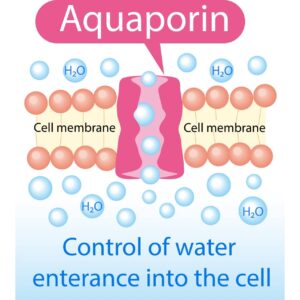
AQUAPORINs (aqps) are a type of protein that function as channels for the transport of water in and out of cells, particularly across cell membranes. Aqps play a crucial role in water transport processes in various living organisms, including plants, animals, and humans.
The functioning of aquaporins is highly specific and efficient in facilitating the movement of water while preventing the passage of other dissolved substances. This specificity ensures the proper regulation of water levels within cells, which is essential for maintaining the body's water balance.
Aquaporins were first discovered in 1992 by Peter Agre, an American biochemist. His discovery earned him the Nobel Prize in Chemistry in 2003. The study of aquaporins has significantly enhanced the understanding of water transport and water balance in living organisms, which is vital for medical and biological sciences.
Impact on The Body
AQUAPORINs (aqps) significantly impact the body by regulating water movement across cell membranes, playing vital roles in various physiological processes
